Gym rest timer
One tap. Sound and vibration at zero. Keeps counting if the screen locks.
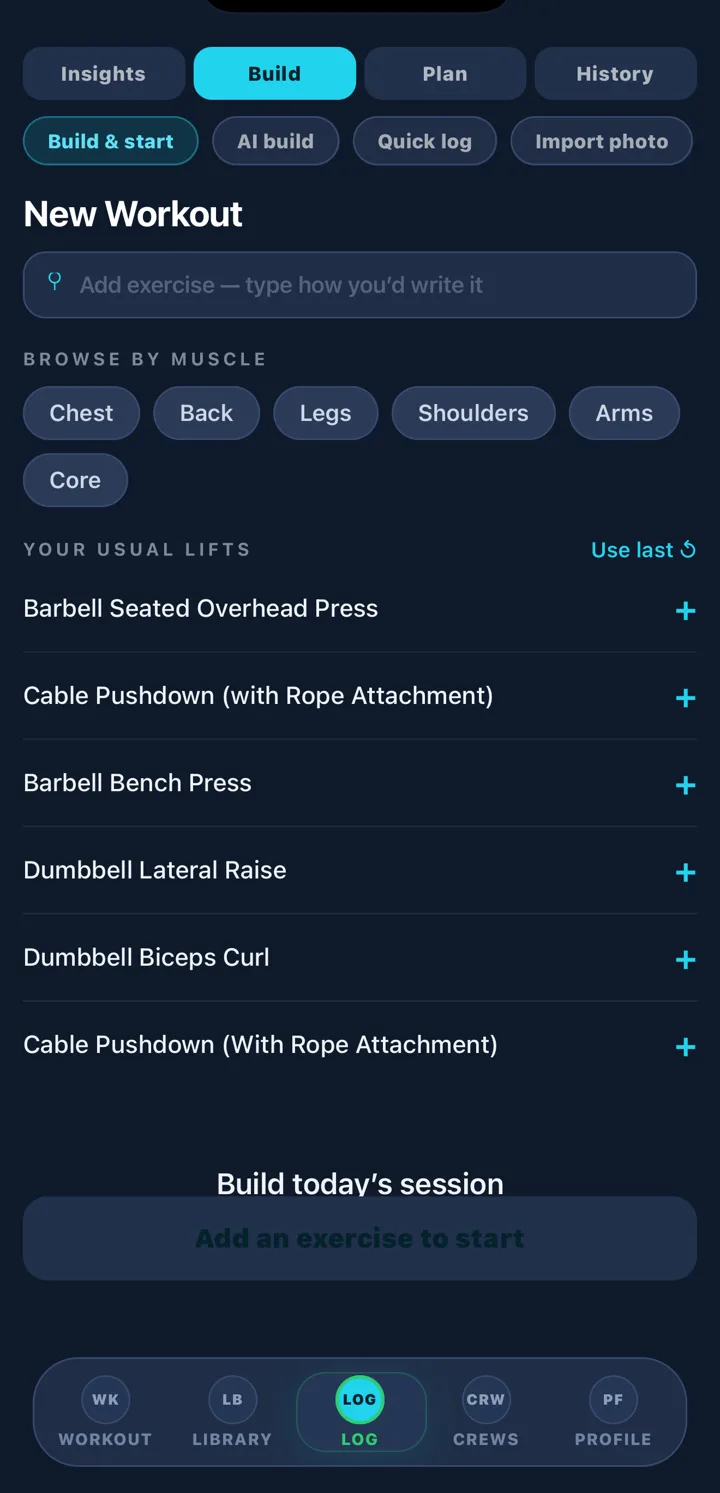
Logging on your phone anyway? In GymAdapt the rest timer starts the second you log a set, defaults to the right length for the exercise, and shares the screen with the plate calculator and last session's numbers. Keep your workout moving →
How long to rest between sets
The right rest depends on what the set is for. Heavy strength work needs full recovery so the next set is as good as the last; hypertrophy work tolerates shorter rests, though the evidence since the mid-2010s says longer rest on compound lifts grows more muscle too, because you keep more reps. Isolation work recovers fast.
| Goal / set type | Reps | Rest | Preset |
|---|---|---|---|
| Strength, compound lifts | 1–5 | 2–5 min | 3 min |
| Muscle growth, compound lifts | 6–12 | 90–180 s | 2 min |
| Muscle growth, isolation | 8–15 | 60–90 s | 90 s |
| Conditioning / circuits | 15+ | 30–60 s | 60 s |
| Supersets (between pairs) | any | 60–120 s | 90 s |
If you're not sure, rest until you're confident you can hit the same reps again, then start the set. If you log your reps and see set three consistently dropping two or more reps below set one, your rest is too short for that exercise.
Why a timer helps at all
Without one, rests drift. They get longer when you're on your phone and shorter when you're in a hurry, and both change the result of the set without you noticing. A fixed rest makes your log comparable week to week, which is the whole point of keeping one. If you're on paper, print our free log and use this page; if you'd rather have both in one screen, that's what the app is for.
Questions
How long should I rest between sets?
For strength on big compound lifts (squat, bench, deadlift, rows, presses) at 5 reps or fewer: 2–3 minutes, sometimes more. For muscle growth in the 8–12 range: 60–120 seconds, and the research since 2016 leans toward the longer end for compound lifts. For isolation work and higher reps: 45–90 seconds. Resting longer than you need costs time; resting less than you need costs reps on the next set.
Is 60 seconds rest enough?
For curls, lateral raises, pushdowns and other isolation work, yes. For squats and presses at working weight, 60 seconds usually costs you reps on sets two and three. Try 90–120 and compare your logged reps.
Does the timer keep running if I lock my phone?
Yes. It counts from the real clock, so the countdown is right when you come back, and it plays a sound and vibrates at zero if your browser allows it. Keep the tab open; browsers pause background tabs aggressively.
Why is the timer inside the GymAdapt app better?
It starts the moment you log a set, so you don't reach for it. It knows the exercise, so it defaults to the right length (longer for squats, shorter for curls). And the plate calculator lives on the same screen. This web timer is for when you're logging on paper.
Timer, plates and last session on one screen
GymAdapt starts the rest the moment you log the set. $7.99/mo with a 7-day free trial, $49.99/yr, or $79.99 once.
Download on theApp Store