Every serious lifter has had the same argument with themselves: the notebook is simple and honest, the app is smart and always with you. Neither is wrong. But they fail in different ways, and the failure that matters is the one that stops you logging at all. Here's the trade, with a real session filled in both ways, so you can pick the system you'll still be using in March.
The same workout, both ways
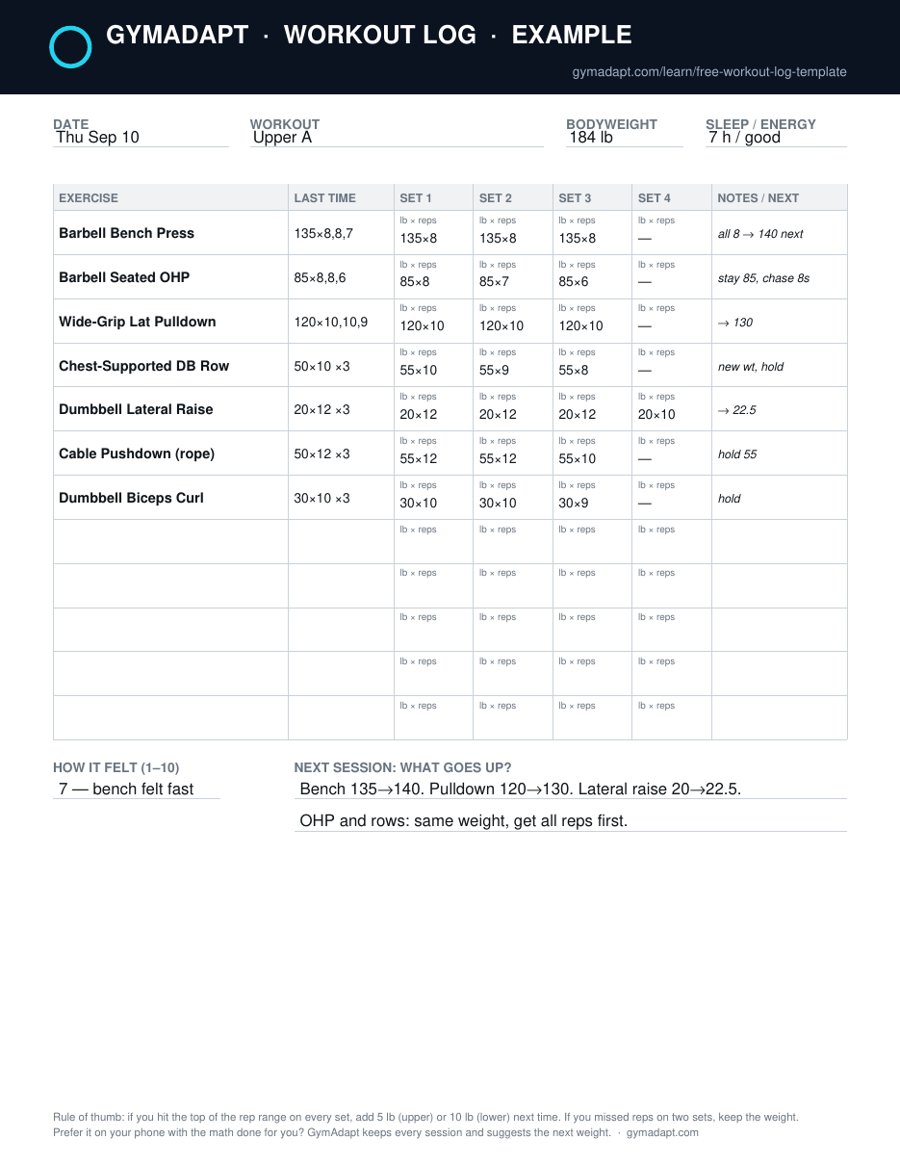
Thursday's upper-body session. Seven exercises, 22 working sets, 41 minutes. Here it is on paper, using our free template:
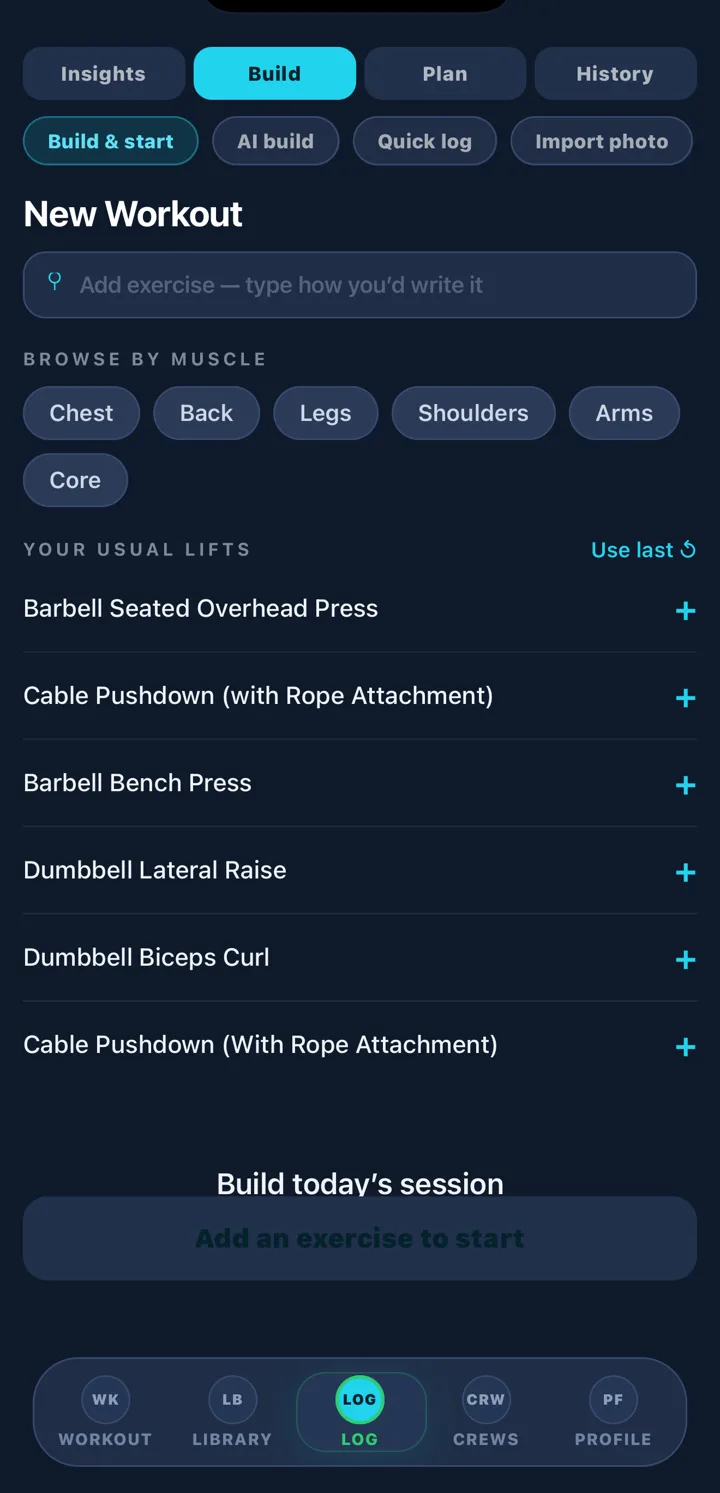
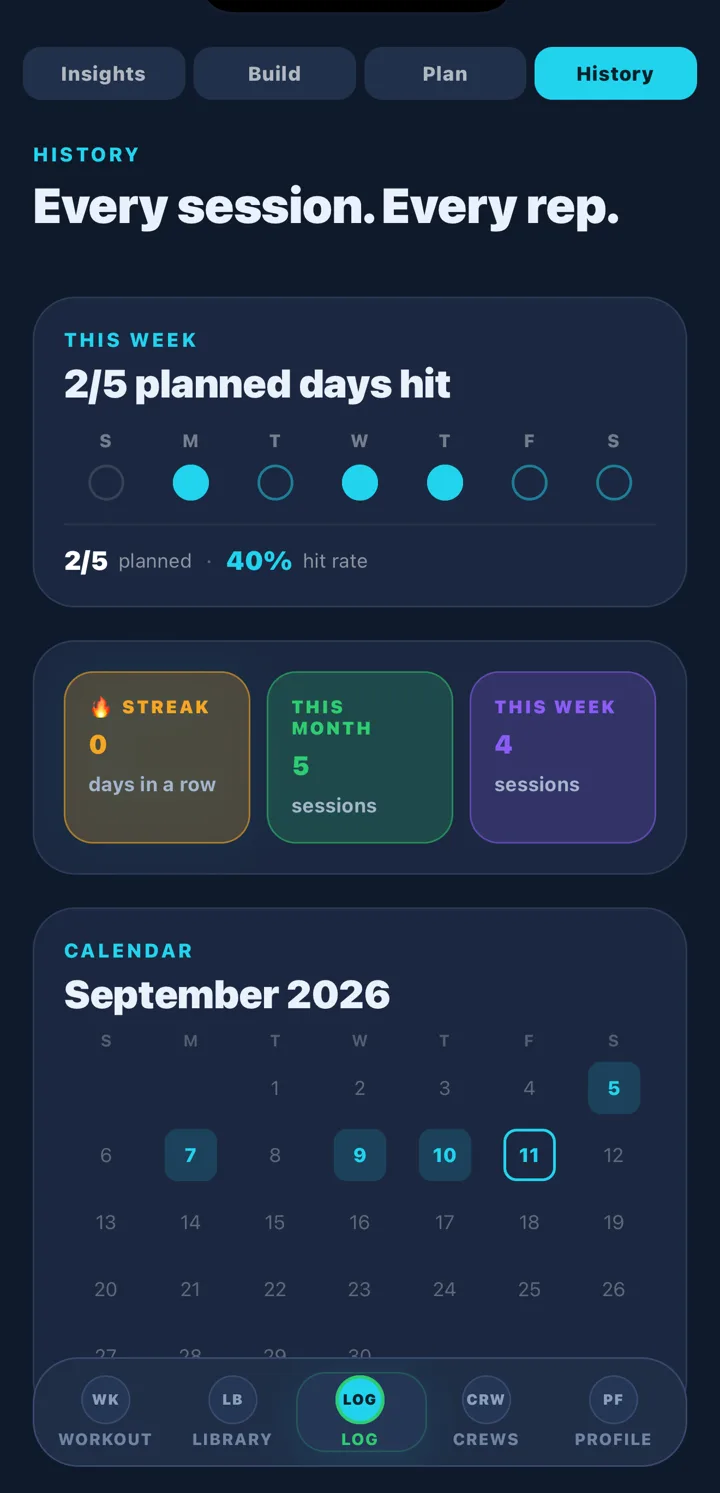
And the same session in an app. This is GymAdapt, but Hevy or Strong would look broadly similar:
Where the log book wins
Nothing to charge, nothing to update, nothing to subscribe to. A $6 notebook lasts a year. No phone between sets. This is bigger than it sounds. The average phone-logger opens Instagram at least once per session; the notebook-logger doesn't, and their rest periods are shorter. Works in the basement gym with no signal. Most logging apps work offline now, but not all of them sync cleanly afterwards. Writing the number makes you remember it. There's decent evidence that handwriting encodes better than typing; the practical version is that paper-loggers usually know their numbers cold and app-loggers often don't.
Where the app wins
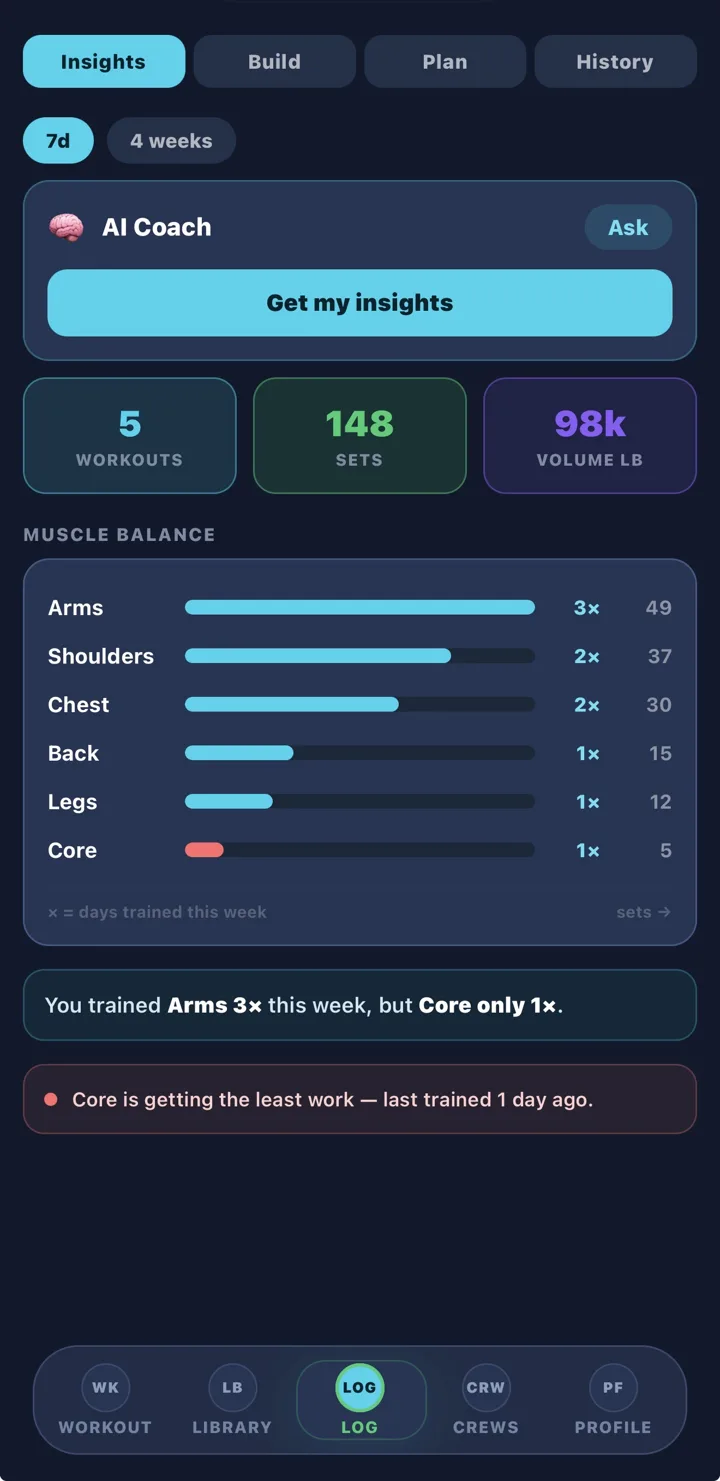
It remembers last time so you don't have to. On paper you copy last week's numbers into a column before you start. It takes a minute and you skip it on the days you're rushed, which are the days you needed it. An app shows last session next to today's empty set automatically. It does the progression math. Hit 8, 8, 8 at 135? The app says 140 next time. On paper, you decide, and "I'll just do 135 again" is easy. GymAdapt goes a step further and pre-fills the suggested weight based on your history and how the last session went. It shows the trend. Is your bench up over three months? A book has the answer across 14 pages. An app has a chart. It notices what you don't. The muscle-balance view above is the honest one: arms three times, core once. Nobody sees that in a notebook. The book is in the car. The phone isn't.
Where each one fails
Books fail slowly. You skip the last-time column, then the next column, then you're just writing numbers with no decision attached, and by month three the book is a diary, not a log. Apps fail fast. The rest timer buzzes, you're on Instagram, and the set you were about to log gets logged as "probably 8." Or the app wants a subscription for the feature you actually needed (Hevy caps free routines at four, Strong at three), and you stall.
Honest comparison
| Need | Log book | App |
|---|---|---|
| Cost | $6–20 one-time | Free tiers exist (Hevy, Strong); full features $3–8/mo |
| Last session visible | Only if you copy it | Automatic |
| Add-weight decision | You do the math | Suggested (Hevy/Strong show last; GymAdapt pre-fills the target) |
| Trend over months | Flip pages | Chart per lift |
| Distraction | None | Real; use Do Not Disturb |
| Video for a new exercise | No | Yes (GymAdapt: real video per exercise) |
| Lost / broken | Gone | Synced |
| Speed per set | Fastest | Fast if it pre-fills; slow if you type |
What we'd actually do
If you've never logged: start on paper for two weeks with the template. It teaches the habit and costs nothing. If you've been on paper and your lifts haven't moved in a month, the problem is the "next" decision, and an app that makes it for you is the cheapest fix available. If you want a straight logger, Hevy or Strong. If you want the log to also tell you what to lift today, that's what GymAdapt is for: it keeps the history, suggests the weight, shows the trend, and lets you photograph the notebook to bring your old pages with you.
Bringing a notebook with you? GymAdapt's Import photo reads a photographed log page into your history, so the app starts with your real numbers, not zero. Try it with your last page →
Questions people ask
Is a workout log book better than an app?
For the first month, they're equal; a book is cheaper and less distracting. Past that, an app wins on the two things that matter for progress: it remembers last session automatically and it shows whether a lift is actually going up. The book wins if your phone is a distraction you can't manage or your gym has no signal and the app needs one.
What's the best workout log book?
Any notebook with a grid. Purpose-made log books (the ones with pre-printed exercise rows) cost $10–20 and run out in 3–6 months. Our free printable template has the same layout and a 'last time' column, which most bought log books lack.
Can I move my paper log into an app?
Yes. GymAdapt's Import photo reads a photographed page into your history; Quick log lets you type it in shorthand. Hevy and Strong support manual entry and CSV import for spreadsheets.
Do I need to log every set?
Log every working set for your main lifts. For warm-ups, no. For isolation work, log the weight and the reps of the last set; that's enough to progress.
Which is faster in the gym?
Paper, for a single set. An app, for a session, because it pre-fills last time and you tap instead of write. Hevy and Strong are fast for barbell work; GymAdapt pre-fills the target weight so you only tap when you deviate.
See whether GymAdapt fits your training
A log that fills in last time, suggests the next weight, charts every lift, and imports your notebook by photo. Plans built from your goal if you want them; ignore them if you don't.
Get GymAdapt on the App Store → $7.99 a month with a 7-day free trial, $49.99 a year, or $79.99 once for lifetime. iPhone only.